
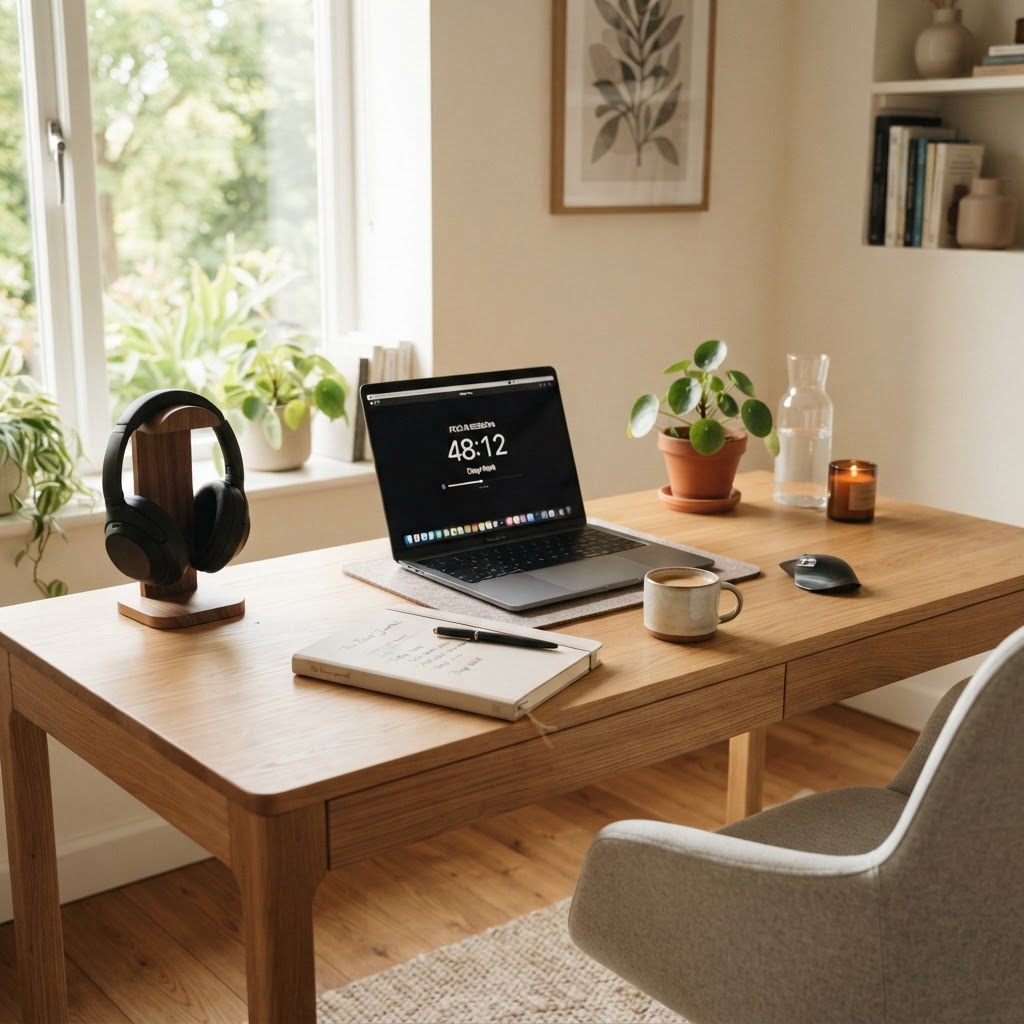
What Is Deep Work (And Why It Matters More Than Ever in 2026)
Cal Newport popularized the term “deep work” back in 2016, but the concept has never been more relevant. Deep work is the ability to focus without distraction on cognitively demanding tasks — the kind of work that creates real value, moves your career forward, and produces results you’re proud of.
The problem? It’s harder than ever to achieve. Between Slack notifications, email pings, Zoom calls, and the endless scroll of social media, the average remote worker is interrupted every 11 minutes. And after each interruption, it takes up to 25 minutes to regain full focus.
That means most people are operating in a state of shallow work all day — busy but not productive. In this guide, we’ll show you how to flip that script and build a deep work routine that actually sticks.
Why Remote Workers Struggle With Focus
Remote work offers incredible flexibility, but it also blurs the line between “available” and “working.” When your office is your living room, the temptation to check messages, jump on quick calls, and multitask is constant.
Research from Stanford shows that remote workers spend 1.4 more hours per day on communication tools than office workers. That’s not deep work — that’s reactive work. You’re responding to other people’s priorities instead of advancing your own.
The solution isn’t to go back to an office. It’s to build a focus-first system that protects your attention.
5 Deep Work Techniques That Actually Work
1. Time Blocking (The Foundation)
Time blocking means assigning every hour of your day to a specific task or category. Instead of a vague to-do list, your calendar becomes your plan.
Here’s how to start: Block 90-120 minutes of deep work first thing in the morning, before email or meetings. This is your peak cognitive window. Protect it fiercely.
Pro tip: Use a physical planner to map out your week on Sunday evenings. Writing things by hand forces clarity and commitment that digital calendars can’t match.
2. The Pomodoro Technique (For Short Bursts)
If 90-minute blocks feel intimidating, start with Pomodoros — 25 minutes of focused work followed by a 5-minute break. After four cycles, take a longer 15-30 minute break.
This technique works because it lowers the activation energy needed to start. You’re not committing to “write the whole report” — you’re committing to 25 minutes. That’s manageable.
While apps work, a dedicated physical Pomodoro timer on your desk removes the temptation to check your phone “just to see the time.”
3. Environment Design (Eliminate Friction)
Your environment shapes your behavior more than willpower ever will. If you have to close 12 tabs, put your phone in another room, and fight through notifications before you can focus, you won’t do it consistently.
Make deep work the path of least resistance:
- Put your phone in another room during focus blocks
- Use noise-canceling headphones as a “do not disturb” signal
- Install a monitor light bar to reduce eye strain during long sessions
- Keep blue light glasses on your desk for late-afternoon focus blocks
4. The “Shutdown Ritual”
How you end your workday determines how well you start the next one. A shutdown ritual — a short routine that signals “work is done” — helps your brain transition out of work mode so you can actually rest.
Your ritual might be: review what you accomplished, write tomorrow’s top 3 priorities, close all browser tabs, and walk away from your desk. Simple but powerful.
5. Batch Shallow Work
You can’t eliminate email, Slack, and admin tasks — but you can contain them. Instead of checking messages throughout the day, batch them into 2-3 designated windows (e.g., 10am, 1pm, 4pm).
This approach, championed by Tim Ferriss, keeps shallow work from colonizing your entire day. The rest of your time stays available for deep, meaningful work.
Building Your Weekly Deep Work Schedule
Here’s a realistic framework for a remote worker with meetings and responsibilities:
Monday–Thursday:
- 8:00–8:30am: Plan the day (review priorities, time block)
- 8:30–10:30am: Deep Work Block 1 (hardest task of the day)
- 10:30–11:00am: Communication window (email, Slack, quick check-ins)
- 11:00–12:00pm: Deep Work Block 2 (second priority)
- 12:00–1:00pm: Lunch + walk
- 1:00–3:00pm: Meetings, collaborative work, shallow tasks
- 3:00–4:30pm: Deep Work Block 3 (wrap up the day’s main goal)
- 4:30–5:00pm: Shutdown ritual
Friday: Open day for catch-up, planning, and lighter tasks. This keeps your schedule flexible enough to handle the unexpected without derailing the whole week.
Measuring Your Deep Work Success
You can’t improve what you don’t track. Here are three simple metrics:
- Deep work hours per week: Aim for 15-20 hours initially. That’s 3-4 hours per day of truly focused, distraction-free work.
- Interruption count: How many times did something break your focus? Set a goal to reduce this number each week.
- Most important task completion: Did you finish your #1 priority each day? This single metric matters more than anything else.
Common Pitfalls (And How to Avoid Them)
Mistake 1: Trying to do deep work for 8 hours straight. Nobody can. Even the best deep workers cap out at 4 hours of true focused work per day. Aim for quality, not quantity.
Mistake 2: Not communicating your focus blocks. If colleagues don’t know you’re unavailable, they’ll interrupt you. Set your Slack status, block your calendar, and tell your team.
Mistake 3: Using “deep work” as procrastination. Planning to focus is not the same as focusing. Don’t spend 30 minutes setting up the perfect environment when you could have started 30 minutes ago.
The Bottom Line
Deep work isn’t a productivity hack — it’s a career advantage. In a world where most people are constantly distracted, the ability to focus deeply on hard problems is increasingly rare and increasingly valuable.
Start small: one 90-minute block tomorrow morning. No email, no Slack, no phone. Just you and your most important work. Build from there.
Recommended on Amazon
Building a deep work routine is easier with the right tools. Here are our top picks for 2026:
🎧 Sony WH-1000XM5 Noise Canceling Headphones
The gold standard for blocking out distractions. Industry-leading noise cancellation, 30-hour battery, and incredibly comfortable for long focus sessions. An investment that pays for itself in reclaimed productivity.
📋 Clever Fox Weekly Planner
A beautifully designed planner for time blocking, habit tracking, and weekly goal setting. The act of writing out your schedule by hand makes you more committed to it than any app can.
💡 BenQ ScreenBar Monitor Light
Reduces eye strain during long focus sessions without causing screen glare. Auto-dims to match your room’s ambient light. A game-changer for early morning and late evening deep work blocks.
⏲️ Cube Timer (Pomodoro Timer)
A simple physical Pomodoro timer — just flip it to start. No phone required, no notifications to distract you. The perfect desk companion for time-blocking your deep work sessions.
👓 ANRRI Blue Light Blocking Glasses
Affordable, lightweight, and genuinely effective at reducing digital eye strain during long screen sessions. Keep a pair at your desk for afternoon deep work blocks.
Disclosure: As an Amazon Associate, I earn from qualifying purchases. This means that if you click on one of the product links above and make a purchase, I may receive a small commission at no additional cost to you. I only recommend products I believe will genuinely help you build better focus and productivity habits. Thank you for supporting this site!
Leave a Reply